
 Log-In
Do Diversity, Equity, and Inclusion (DEI) initiatives affect merit-based hiring? In most organizations, DEI is designed to improve how merit is identified by reducing bias in hiring processes and expanding access to qualified candidates.
However, debates continue about whether certain implementations shift attention away from individual qualifications. Understanding how DEI interacts with modern hiring systems is essential as companies move toward skills-based and competency-driven evaluation models.
AI-Powered Recruitment for Faster Hiring
Find qualified candidates faster with intelligent sourcing and automated screening.
Key Summary
- DEI can support merit-based hiring by reducing bias and widening candidate access.
- Structured interviews, blind screening, and skills assessments help evaluate real ability.
- DEI may weaken hiring if representation targets override competency standards.
- The blog concludes that transparent, skills-based hiring systems help DEI and merit coexist.
What DEI Means in Modern Hiring Systems
In hiring, Diversity, Equity, and Inclusion (DEI) focuses on how organizations design recruitment and evaluation processes to ensure fair access to opportunities. Rather than changing hiring standards, DEI initiatives often aim to reduce bias in sourcing, screening, and interviewing candidates.
Many companies apply practices such as structured interviews, blind resume screening, and broader recruiting channels to ensure that hiring decisions focus on measurable skills, competencies, and job-related performance rather than background signals.
Core Components of DEI
DEI in hiring systems usually focuses on three operational principles:
- Diversity: Representation of candidates from varied educational, professional, and demographic backgrounds.
- Equity: Hiring processes designed to ensure candidates are evaluated under comparable conditions.
- Inclusion: Workplace structures that allow employees to participate in decision-making and team collaboration.
These elements influence recruitment channels, evaluation methods, and how organizations structure candidate assessment.
How the Definition of Merit Is Changing in Hiring
In hiring research, the meaning of merit has gradually shifted from background indicators to measurable capability. By 2026, the concept is often described through two evaluation models.
Traditional Merit (Proxy Model)
This model relies on past signals believed to predict future performance.
Common indicators include:
- Academic credentials such as degrees from selective universities
- Employer pedigree, including roles at well-known companies
- Years of experience within a specific industry
- Perceived cultural fit, often assessed through interviews
These factors act as proxies rather than direct evidence of job performance.
Modern Merit (Evidence Model)
A newer approach prioritizes measurable ability and outcomes.
Key evaluation factors include:
- Verified skills and competencies through assessments or simulations
- Performance outcomes tied to measurable KPIs
- Problem-solving ability and adaptability
- Learning trajectory and growth potential
Hiring Infrastructure
Many systems now support merit evaluation through structured processes:
- Standardized scoring rubrics
- Blind resume screening
- Job-related performance assessments
Comparison of Modern Hiring Models
| Hiring Model | Key Method | Companies Using It | Strengths | Risks |
| Traditional Merit | Credentials, employer pedigree, years of experience | Many legacy corporate hiring systems | Simple benchmarking across candidates | May overlook capable candidates without elite credentials |
| DEI-Informed Hiring | Bias-aware screening, broader sourcing, structured interviews | Large enterprises adopting inclusive hiring frameworks | Expands candidate pools and reduces evaluation bias | Perception concerns whether the hiring criteria are not transparent |
| Skills-Based Hiring | Job simulations, competency tests, portfolio evaluation | IBM, Google, and many tech firms | Direct measurement of job-relevant ability | Requires well-designed and validated assessments |
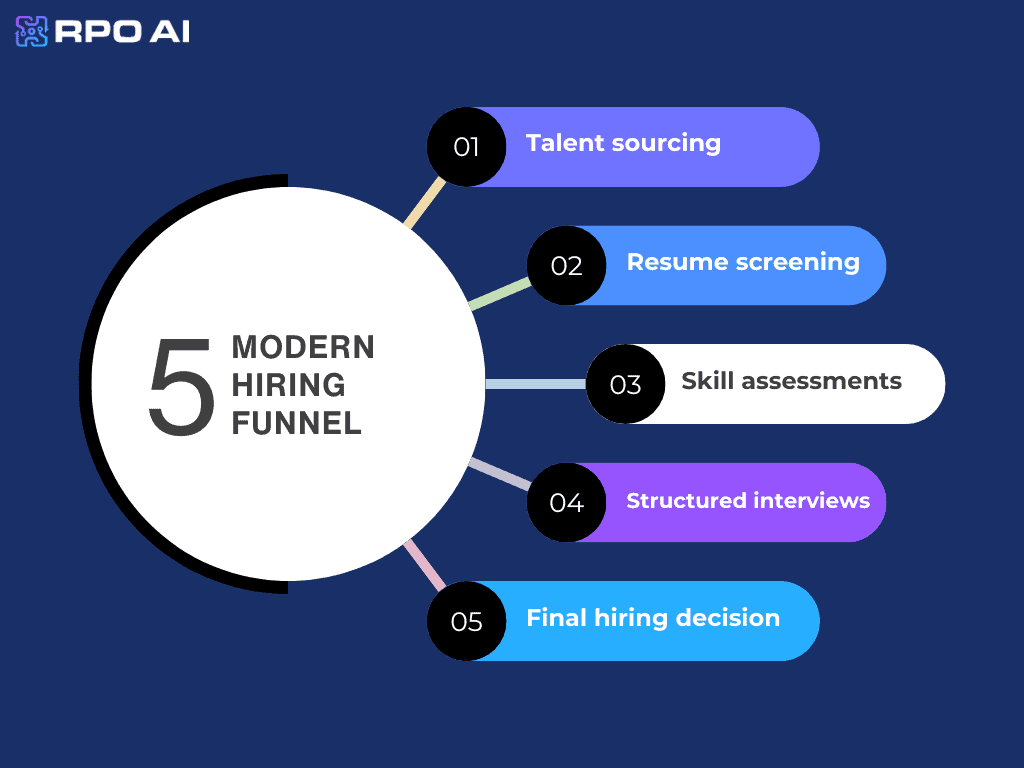
How DEI Can Support Merit-Based Hiring Outcomes
Supporters argue that DEI can strengthen merit-based hiring when it improves how candidates are sourced and evaluated. Many organizations use structured hiring methods to reduce bias and focus on measurable ability.
Key ways DEI supports merit-based hiring include:
- Expanded sourcing pipelines: Companies recruit beyond traditional universities or networks, increasing access to qualified candidates who may otherwise be overlooked.
- Bias-reduction screening methods: Practices such as blind resume screening remove identifiers like names or demographics so recruiters focus on experience and skills.
- Structured evaluation metrics: Standardized interview rubrics, work simulations, and skills assessments allow hiring teams to compare candidates using consistent performance criteria.
Research in hiring behavior also shows that structured interviews and standardized scoring systems often produce more reliable hiring decisions than informal interviews.
How DEI May Affect Merit-Based Hiring Outcomes
Critics argue that certain DEI implementations can complicate merit-based evaluation when demographic goals begin to influence hiring decisions. The concern is not about diversity itself, but about how hiring frameworks are applied.
Common arguments include:
- Target-driven hiring pressure: When organizations prioritize diversity metrics, some critics argue that hiring teams may feel pressure to meet representation targets during recruitment.
- Perception of identity-based decisions: If employees believe hiring decisions are influenced by demographic factors, workplace trust and perceptions of fairness may be affected.
- Concerns about evaluation standards: Some critics argue that reducing emphasis on traditional credentials or testing could weaken consistent skill assessment.
These critiques often emphasize the importance of maintaining transparent and competency-based hiring processes.
Research Findings on DEI and Hiring Performance
Several research organizations have studied how workforce diversity and inclusive hiring systems influence business outcomes and talent performance.
- McKinsey & Company – Diversity Wins Report: McKinsey analyzed over 1,000 companies across multiple industries and found that organizations with higher ethnic diversity in leadership teams were 36% more likely to outperform competitors financially. The study linked diversity to broader decision-making perspectives and stronger innovation outcomes.
- Harvard Business Review research: Studies published in Harvard Business Review show that diverse teams often examine problems from multiple viewpoints, which can improve decision quality in areas such as hiring, product development, and strategy.
- MIT Sloan School of Management: Research from MIT Sloan indicates that organizations with inclusive workplace cultures tend to report higher employee engagement and retention, which directly affects long-term hiring success and workforce stability.
World Economic Forum workforce studies: Global workforce analyses suggest that companies expanding access to talent pools often increase innovation capacity and productivity by bringing in candidates with varied expertise and experiences.
Common Misconceptions About DEI in Hiring
Public discussions about DEI often include assumptions that do not reflect how most hiring systems actually operate. Clarifying these points helps separate policy debates from hiring mechanics.
- DEI lowers hiring standards: Most organizations still rely on competency frameworks, skills testing, and structured interviews. DEI initiatives typically expand candidate sourcing rather than change performance criteria.
- DEI requires hiring quotas: In many companies, DEI programs focus on widening recruiting pipelines and reducing bias in screening processes, not mandating fixed demographic hiring targets.
- DEI replaces merit-based evaluation: Modern hiring models increasingly use standardized assessments and role-specific scoring systems to evaluate measurable skills.
DEI prioritizes identity over capability: In structured hiring systems, candidate capability, experience, and demonstrated performance remain central to final hiring decisions.
Examples of Merit-Based Hiring Systems Used Today
Many organizations apply structured hiring systems to evaluate candidates using measurable skills and consistent criteria rather than informal judgments.
- Google structured interviews: Google uses standardized interview rubrics where candidates are evaluated against predefined competencies. Interviewers score responses using consistent criteria to reduce subjective bias.
- Amazon leadership principle scoring: Amazon evaluates candidates using its leadership principles framework. Interviewers assess responses against behaviors such as ownership, problem-solving, and customer focus.
- Skills-based hiring models: Many organizations now prioritize job-relevant skills through coding tests, simulations, or work samples instead of relying primarily on degrees or employer pedigree.
Blind resume screening systems: Some hiring platforms remove personal identifiers such as names or demographics during early screening to focus attention on qualifications and experience.
When DEI Strengthens Merit-Based Hiring
In practice, DEI tends to support merit-based hiring when it improves the hiring system rather than replacing it.
Examples include:
- Structured interviews that score candidates against the same competency rubric
- Blind resume screening that removes irrelevant identity signals
- Expanded recruitment pipelines that increase access to qualified candidates
In these cases, DEI operates as a process correction tool, reducing noise in candidate evaluation.
When DEI Weakens Merit-Based Hiring
Hiring outcomes can become distorted when DEI goals shift from process design to representation targets.
Examples include:
- Hiring quotas that override competency scoring
- Informal pressure on recruiters to meet demographic metrics
- Reduced emphasis on validated skill assessments
In these cases, the hiring system may move away from performance-based evaluation.
The Real Determinant: Hiring System Design
The impact of DEI on merit-based hiring depends less on ideology and more on how hiring systems are structured.
Organizations that rely on:
- standardized assessments,
- measurable performance indicators, and
- transparent evaluation criteria.
They are more likely to identify high-performing candidates regardless of the label attached to their hiring philosophy.
The debate, therefore, centers less on whether DEI exists and more on whether hiring systems accurately measure capability.
Wrapping Up
The impact of DEI on merit-based hiring often depends on how structured the hiring process is. Organizations that use standardized interviews, competency frameworks, and skills-based assessments can evaluate candidates more accurately. AI-powered recruitment platforms make this process faster by automating sourcing and screening.
Solutions like AI-driven hiring systems enable companies to identify qualified candidates efficiently while keeping the focus on measurable skills and real performance.
To explore how we support growing teams
FAQs on Merit Based Hiring
- Does DEI reduce hiring standards?
Most organizations continue to use structured hiring criteria such as competency frameworks, role-specific assessments, and interview scoring systems. DEI initiatives generally focus on widening candidate sourcing and reducing bias in screening rather than changing performance standards.
- Can merit-based hiring and DEI coexist?
Yes. Many organizations combine broad talent sourcing with structured evaluation systems. This approach allows companies to expand access to candidates while still selecting hires based on demonstrated skills, experience, and performance indicators.
- What is skills-based hiring?
Skills-based hiring evaluates candidates using measurable abilities such as technical tests, work simulations, or portfolio reviews. Instead of relying mainly on academic credentials or employer history, hiring decisions are based on job-relevant competencies.
- Why are companies shifting to competency-based hiring?
Organizations increasingly prioritize competency-based hiring because it focuses on verified skills and measurable outcomes. This approach can improve hiring accuracy by aligning candidate capabilities with the actual requirements of a role.
- Where to place this section:
Add the FAQ section just before the conclusion of the article. This placement strengthens SEO by capturing People Also Ask queries while maintaining a logical flow from discussion → evidence → hiring systems → final summary.

Rameet Singh, Founder & CEO of RPO.AI