
 Log-In
Remember when posting a job meant drowning in hundreds of unqualified applications? You’re not alone in this struggle. Currently, 42% of companies are using AI screening to improve recruiting and human resources, showing just how broken traditional hiring has become.
But AI recruitment is changing everything, making hiring faster and smarter than ever before.
For readers in a hurry:
This article explains how AI recruitment is transforming modern hiring by making sourcing, screening, interviewing, and decision-making faster, more accurate, and more equitable. It is written for recruiters, HR leaders, and hiring managers who want to modernize their hiring processes without replacing human judgment.
The Current State of AI-Powered Recruitment Technology
The recruitment world has shifted dramatically in recent years. Artificial intelligence in recruitment isn’t just about fancy algorithms anymore – it’s become a practical necessity for staying competitive.
Today’s AI in recruitment tools can predict candidate success, analyze soft skills through video interviews, and even forecast which hires will stick around long-term. Companies like Unilever have slashed their hiring time from four months to just four weeks using these technologies. What’s driving this adoption? The numbers speak for themselves – 62% of talent acquisition professionals say they are optimistic about AI’s impact on recruitment.
This optimism comes from real results. Modern AI-powered recruitment systems integrate conversational AI, multimodal analysis, and predictive modeling into seamless workflows. They’re not just automating tasks – they’re making smarter hiring decisions possible. But the real game-changer is how these tools work together, creating intelligent hiring ecosystems that learn and adapt.
Key Ways AI Is Transforming Hiring Practices
The transformation happening in recruitment goes far beyond simple automation. AI in hiring is reshaping every aspect of how companies find and evaluate talent.
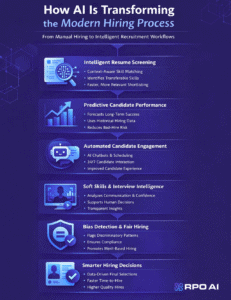
Resume Screening Gets Superhuman Accuracy
AI recruiting has moved past basic keyword matching. Modern systems understand context, evaluate transferable skills, and spot high-potential candidates who might not have obvious qualifications through AI resume screening platforms.
The real advantage is not speed. It is semantic analysis that understands industry jargon and evaluates skill progression patterns. These systems can identify candidates whose career trajectories suggest future success, even when their current titles do not match perfectly.
Predictive Analytics Reveals Future Performance
Instead of relying on gut feelings, AI in talent acquisition can predict candidate success with 75% accuracy by analyzing your company’s historical hiring data. Platforms like Eightfold AI identify which combinations of skills, experience, and personality traits lead to long-term success in specific roles.
The key to implementation lies in feeding these systems data from your top performers first. This creates success profiles that become more accurate over time, transforming hiring from guesswork into data-driven decisions.
Chatbots Transform Candidate Experience
Using AI in recruitment through sophisticated chatbots has revolutionized candidate interactions. These aren’t basic FAQ bots – they handle complex queries, schedule interviews across time zones, and provide personalized feedback. The latest versions use emotional intelligence to detect candidate frustration and escalate appropriately.
Companies using advanced chatbots see 67% improvement in candidate satisfaction scores. Voice-enabled chatbots for initial phone screenings create more natural interactions than text-based systems, setting a new standard for candidate engagement.
Video Interview Analysis Decodes Soft Skills
AI-driven recruitment now includes analyzing facial expressions, voice tone, and micro-gestures during video interviews. This technology assesses communication skills, confidence levels, and cultural fit objectively. However, smart companies use this as supporting data, not the sole decision factor.
Look for platforms that provide explainable AI – showing exactly which behaviors led to specific assessments. This transparency builds trust and helps hiring managers make informed decisions.
Bias Detection Creates Fairer Hiring
Advanced artificial intelligence in recruitment systems includes bias detection algorithms that flag potentially discriminatory patterns. These tools identify when certain demographic groups are disproportionately filtered out and suggest corrective actions.
With EU AI regulations now requiring bias testing for recruitment AI, implementing these practices early gives companies a competitive advantage. Some platforms even anonymize candidate information during initial screening to ensure purely merit-based evaluation.
Passive Candidate Sourcing Becomes Proactive
AI in recruitment continuously scans professional networks, industry publications, and project databases to identify passive candidates who aren’t actively job hunting. These systems trigger personalized outreach when someone’s career trajectory suggests they might be open to opportunities.
Currently, 40% use AI to source and engage talent for pipeline purposes. The untapped strategy involves monitoring patent filings, conference speakers, and research publications to find innovative talent before they hit the general market.
Real-Time Market Intelligence Optimizes Job Postings
Modern AI-powered recruitment provides real-time salary benchmarking, skills demand analysis, and competitor intelligence. These systems suggest optimal posting times, platform selection, and language adjustments based on current market conditions.
Dynamic job descriptions that automatically adjust requirements based on application volume and market scarcity are becoming the new norm. This responsiveness gives companies significant advantages in tight talent markets.
Automated Reference Checking Accelerates Final Decisions
AI recruiting platforms conduct thorough background verification through automated calls, digital questionnaires, and social media analysis. This reduces the final hiring stage from weeks to days while providing more comprehensive insights than traditional reference checks.
Focus on platforms that verify specific competencies rather than just employment history. This approach provides actionable insights that support better hiring decisions and reduce the risk of bad hires.
Advanced AI Integration Strategies for Modern Recruiters
Moving beyond basic implementation requires creating integrated AI ecosystems where different tools share data and insights. Successful organizations layer multiple AI capabilities – starting with intelligent sourcing, moving through predictive screening, and ending with performance forecasting.
Smart companies use AI in talent acquisition for workforce planning, predicting future skill needs based on business projections and market trends. This allows them to build talent pipelines before positions become urgent, creating significant competitive advantages.
The key differentiator is establishing feedback loops where AI systems continuously learn from hiring outcomes. This makes them more accurate over time and helps them adapt to your specific organizational culture and requirements.
Measuring Success and ROI in AI Recruitment
Tracking the Right Metrics
Focus on quality metrics rather than just speed improvements. Key indicators include time-to-productivity for new hires, 90-day retention rates, hiring manager satisfaction scores, and diversity improvements. The best artificial intelligence in recruitment implementations shows improvement across all these areas simultaneously.
Calculate predictive accuracy scores for different AI tools to identify which platforms provide the most reliable insights for your specific hiring needs. This data-driven approach helps optimize your AI investment.
Building Continuous Improvement Loops
Establish regular review cycles where hiring outcomes feed back into AI systems to improve future predictions. Track which AI recommendations led to successful hires and adjust algorithms accordingly.
Despite the benefits, 42% of those surveyed do not currently and do not plan to use AI as part of their TA [Talent Acquisition] practice, highlighting the importance of measuring and demonstrating clear ROI to drive broader adoption.
Preparing for the Future of AI Recruitment
Emerging Technologies to Watch
Voice analysis AI, emotional intelligence assessment, and augmented reality job simulations are becoming mainstream. Companies should start pilot programs now to gain experience with these technologies before they become industry standards.
The future of AI in recruitment includes deeper integration between AI and workforce planning, where predictive analytics forecast talent gaps months in advance. This helps HR leaders proactively recruit or train from within.
Skills Development for Recruitment Teams
Modern recruiters need to become AI-fluent – understanding how to interpret algorithmic recommendations, identify potential biases, and combine AI insights with human judgment effectively.
In 2024, AI adoption is predicted to spike, with 81% of surveyed companies planning to invest in AI-driven solutions to automate and enhance their recruiting processes. Invest in training your team on data analysis and AI interpretation skills now to stay ahead of this trend.
Ready to Transform Your Hiring Process
AI recruitment isn’t just changing how we hire – it’s fundamentally reshaping what’s possible in talent acquisition. From superhuman resume screening to predictive performance analytics, these tools give forward-thinking companies unprecedented advantages in the war for talent.
The key to success lies not in replacing human judgment, but in combining it with AI capabilities that handle data processing and pattern recognition at scale. Start by identifying your biggest recruitment pain point and implement one AI solution that directly addresses that challenge.
Your AI Recruitment Questions Answered
How do you ensure AI recruitment tools don’t discriminate against certain groups?
Implement regular bias audits, use diverse training datasets, and work with vendors who provide transparency reports. Establish human oversight checkpoints and monitor hiring outcomes across different demographic groups for continuous improvement.
What’s the best way to introduce AI recruitment to skeptical hiring managers?
Start with pilot programs on non-critical hires to demonstrate value without risk. Share specific metrics showing time savings and quality improvements while positioning AI as enhancing rather than replacing human decision-making.
Can AI recruitment tools integrate with existing HR systems?
Most modern AI recruitment platforms offer APIs and pre-built integrations with popular HRIS, ATS, and payroll systems. However, data quality and standardization are crucial for successful integration and require proper planning.
What happens to candidate data privacy with AI recruitment tools?
Reputable AI recruitment platforms comply with GDPR, CCPA, and other privacy regulations. Ensure vendors provide data encryption, consent management, and data deletion capabilities while informing candidates about AI usage in your process.
How do you handle false positives and negatives from AI screening?
Implement multi-stage screening processes where AI handles initial filtering, but humans review edge cases. Establish appeal processes for candidates and regularly calibrate AI thresholds based on hiring outcomes and market feedback.
Related Reads
Real Metrics: How AI Reduced Our Time‑to‑Hire by 65%
APAC to Silicon Valley: Scaling AI Recruiting Globally

Rameet Singh, Founder & CEO of RPO.AI