
 Log-In

If you are part of a recruiting or talent acquisition team, you already know the pressure. Open roles are increasing. Hiring managers expect faster results. Candidates expect quick responses and personalized communication. At the same time, recruiters are buried in resumes, scheduling emails, data entry, and reporting.
This is where AI productivity tools make a difference.
In this article, you will learn what AI productivity tools are, how they support modern recruiting teams, and why they are becoming essential for improving speed, quality of hire, and recruiter efficiency.
If your team wants to reduce manual work, shorten hiring cycles, and make better data-driven decisions, this guide will show you how AI helps you do exactly that.
The Recruiting Challenge Today
Recruiters contend with three persistent pressures:
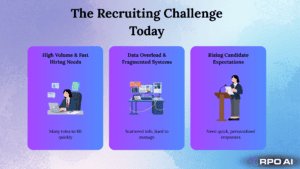
- Volume and Velocity of Hiring Needs
Organizations scale rapidly. New roles emerge daily. Recruiters must fill positions faster without sacrificing quality.
- Data Overload Without Insight
Talent data resides in multiple systems: ATS, job boards, email, and social channels. Sifting through it manually drains time and increases error risk.
- Candidate Expectations Have Changed
Candidates now expect timely communication, personalized engagement, and seamless digital experiences. Manual follow-ups and generic messaging fall short.
These pressures expose the limits of manual recruiting workflows. They also reveal the opportunity cost of not adopting productivity-enhancing technology.
What Are AI Productivity Tools in Recruiting
AI productivity tools use machine learning and automation to perform tasks that have historically required human time and judgment. In recruiting, these include:
– Automated resume screening
– Job description optimization
– Candidate sourcing across platforms
– Chatbots for candidate engagement
– Interview scheduling automation
– Predictive analytics for fit and performance
These tools do not replace recruiters. They augment them. They remove low-value work so recruiters can focus on high-value, strategic, human interactions.
Why AI Productivity Tools Are Essential
1. Speed Hiring with Automated Screening and Shortlisting
Traditional resume screening is time-consuming and inconsistent. AI models can parse resumes, match them to job criteria, and rank candidates based on skills, experience, and relevance.
This reduces the time to create quality shortlists from days to hours.
2. Improve Quality of Hire Using Predictive Insights
AI tools can analyze patterns in historical hiring data to identify traits of high performers. This supports smarter screening and reduces bias that often creeps into manual evaluation.
Recruiters armed with predictive insights make better choices that improve retention and performance outcomes.
3. Reduce Administrative Burden
Recruiters spend up to 60 percent of their time on administrative tasks like scheduling, follow-ups, and data entry. AI automation handles these reliably and accurately:
– Schedule interviews across calendars
– Send reminders and confirmations
– Sync candidate data with HR systems
Removing repetitive tasks increases recruiter productivity without additional headcount.
4. Deliver Faster Candidate Communication
Candidates expect responsiveness. AI-driven chatbots and automated messaging ensure:
– Rapid responses to inquiries
– Consistent communication at scale
– Personalized messages without manual effort
This improves candidate experience and elevates your employer brand.
5. Support Data-Driven Decision Making
AI tools generate analytics that empower recruiting teams with actionable insights:
– Time-to-hire
– Source effectiveness
– Pipeline bottlenecks
– Candidate dropout trends
These insights help teams optimize processes and demonstrate measurable ROI to business leaders.
Real Business Impact
AI productivity tools do more than improve workflow. They deliver measurable outcomes that directly affect recruiting performance and business growth.
Shorter Time to Hire- Automated screening, sourcing, and scheduling reduce delays in the hiring process. Roles get filled faster without compromising candidate quality.
Lower Cost per Hire- By reducing manual effort and improving efficiency, recruiting teams can handle higher volumes without increasing headcount or agency spend.
Higher Quality of Hire- AI-driven matching and data analysis help identify candidates who align closely with role requirements and performance indicators.
Improved Recruiter Productivity- With repetitive tasks automated, recruiters spend more time on strategic conversations, stakeholder alignment, and candidate engagement.
Better Candidate Experience- Faster communication and consistent follow-ups create a smoother hiring journey, strengthening employer brand perception.
Data-Backed Hiring Decisions- Real-time insights into pipeline performance and sourcing effectiveness support smarter, evidence-based decisions.
When implemented correctly, AI productivity tools shift recruiting from reactive execution to strategic talent acquisition.
Addressing Common Misconceptions
AI productivity tools are often misunderstood. Here are the most common concerns recruiting teams raise and what they need to know.
“AI Will Replace Recruiters”
AI handles repetitive tasks such as screening resumes and scheduling interviews. Recruiters still lead interviews, assess cultural fit, and make final decisions. AI increases capacity; it does not replace human judgment.
“AI Creates Bias”
Bias often exists in manual processes and historical data. When designed and monitored properly, AI can standardize evaluations and focus on skills and qualifications, helping reduce subjective bias.
“AI Is Too Complex to Implement”
Most modern AI tools integrate with existing ATS and HR systems. They are built for recruiters, not technical teams. Implementation is typically straightforward with guided onboarding.
“Automation Hurts Candidate Experience”
In reality, automation improves responsiveness. Faster replies, streamlined scheduling, and consistent communication enhance the candidate journey while freeing recruiters for meaningful conversations.
When used strategically, AI strengthens recruiting performance without removing the human element.
How to Evaluate AI Productivity Tools
Not all AI tools deliver the same value. Recruiting teams should evaluate solutions carefully to ensure they improve productivity without adding complexity.
1. Integration with Existing Systems
The tool should connect easily with your ATS, HRIS, and communication platforms. Seamless integration prevents duplicate work and ensures data flows accurately across systems.
2. Automation That Solves Real Bottlenecks
Focus on tools that address your biggest time drains, whether that is resume screening, sourcing, scheduling, or candidate follow-ups. The goal is measurable time savings, not additional features you will not use.
3. Transparency and Explainability
Recruiters should understand how the AI ranks or recommends candidates. Look for tools that provide clear reasoning behind decisions to maintain trust and compliance.
4. Data Security and Compliance
Recruiting involves sensitive candidate data. Ensure the platform meets data privacy standards and complies with relevant regulations.
5. Scalability and Reporting
Choose a solution that can support both current hiring needs and future growth. Strong reporting capabilities should provide insights into time-to-hire, source performance, and pipeline efficiency.
The right AI productivity tool should simplify recruiting operations, increase speed, and deliver measurable improvements in hiring outcomes.
Final Thoughts
AI productivity tools are not a future trend. They are essential tools for recruiting teams that need to deliver speed, quality, and strategic value. By automating repetitive tasks, providing predictive insights, and improving communication, AI tools enable recruiting teams to operate at the pace and complexity of modern business.
Teams that adopt AI early will gain a competitive advantage in talent acquisition, build stronger candidate relationships, and shift recruiting from tactical execution to strategic impact.
Recruiting teams that want to transform performance should evaluate, adopt, and master AI productivity tools now.
Frequently Asked Questions
1. What are AI productivity tools in recruiting?
AI productivity tools use automation and machine learning to handle tasks like resume screening, candidate sourcing, scheduling, and reporting. They help recruiters save time, reduce manual work, and make faster hiring decisions.
2. How do AI tools improve recruiter efficiency?
AI tools automate repetitive tasks such as screening resumes and coordinating interviews. This allows recruiters to focus on candidate relationships, hiring manager collaboration, and strategic workforce planning instead of administrative work.
3. Do AI recruiting tools reduce hiring bias?
When designed responsibly, AI tools can standardize evaluations based on skills and qualifications. This reduces subjective decision-making and helps create a more consistent and fair hiring process.
4. Are AI productivity tools difficult to implement?
Most modern AI recruiting platforms integrate with existing ATS and HR systems. With proper onboarding and training, implementation is typically smooth and does not require deep technical expertise.
5. Can AI improve candidate experience?
Yes. AI enables faster responses, streamlined scheduling, and consistent communication. This improves responsiveness and ensures candidates stay engaged throughout the hiring process.